Emergency Plumbing Service in Charlotte, NC
Overflowing Toilet
An overflowing toilet is one of the most stressful plumbing situations a homeowner can face. Water on the bathroom floor, the risk of sewage contamination, and no clear idea of what is causing it — it is unpleasant, potentially unsanitary, and needs to be dealt with immediately. This page explains what causes toilets to overflow in Charlotte homes, what to do right now, and when the problem is more serious than a simple clog.
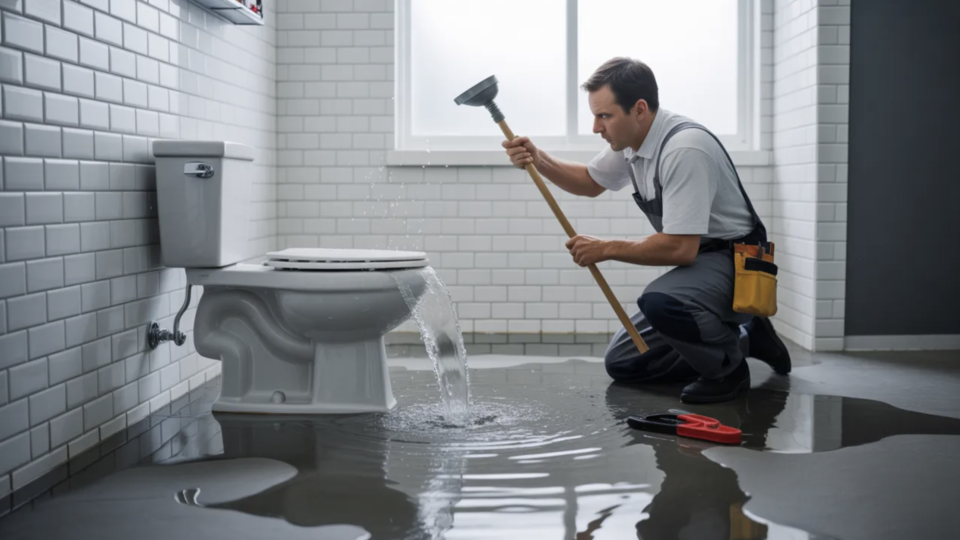
Emergency toilet repair in Charlotte, NC for overflows, backups, and clogs. Our team responds quickly to prevent damage and restore functionality.
An overflowing toilet is one of the most stressful plumbing situations a homeowner can face. Water on the bathroom floor, the risk of sewage contamination, and no clear idea of what is causing it — it is unpleasant, potentially unsanitary, and needs to be dealt with immediately. This page explains what causes toilets to overflow in Charlotte homes, what to do right now, and when the problem is more serious than a simple clog.
Do This First — Before Anything Else
If your toilet is actively overflowing right now, do not keep flushing to see if it clears. It will not. Do this instead:
Step 1 — Remove the tank lid and push the flapper down. The flapper is the rubber valve at the bottom of the tank. Pressing it down stops water from continuing to flow into the bowl.
Step 2 — Turn off the water supply to the toilet. The shutoff valve is the oval-shaped handle on the wall or floor behind and below the toilet. Turn it clockwise until it stops. This cuts off the water supply entirely and stops the overflow.
Step 3 — Do not flush again until the blockage is cleared. A second flush will push more water into an already full bowl and make the overflow worse.
Step 4 — If there is sewage water on the floor, avoid contact with it and keep children and pets out of the bathroom. Sewage water is a contamination risk. Use gloves when cleaning up.
Step 5 — Call for service if plunging does not clear the blockage within a few attempts, or if the toilet overflows without an obvious clog, or if other drains in the house are also backing up.
What Causes a Toilet to Overflow
Not all overflowing toilets have the same cause, and identifying the right cause matters — because the fix is different depending on what is actually happening.
A clog in the toilet trap or drain line
This is the most common cause. Something in the toilet — too much paper, a foreign object, or waste that is too large to pass through the trap — is blocking the flow. When you flush, water fills the bowl faster than it can drain, and it overflows. This type of overflow is local to the toilet and does not affect other drains.
A clog in the branch drain line
The branch line carries waste from the toilet to the main drain line. A blockage here affects the toilet and sometimes other nearby fixtures on the same floor. If the bathroom sink or tub also drains slowly when the toilet is having problems, the blockage is likely in the branch line, not the toilet itself.
A main sewer line blockage
This is the most serious cause and is easy to identify because multiple fixtures in the home are affected at the same time. The clearest sign: water backs up in the tub or shower when you flush the toilet, or the toilet gurgles and bubbles when the washing machine drains. When this happens, the main sewer line — which carries all wastewater from the home to the city connection — is blocked or severely restricted. In this situation, do not use any water in the home until the line is cleared.
A full septic tank
Homes in parts of the Charlotte metro area — particularly in more rural sections of the surrounding counties — are on septic systems rather than city sewer. A full or failing septic tank causes toilets to back up and drain slowly throughout the home. If you are on a septic system and experiencing toilet backups, the septic tank should be inspected.
A faulty fill valve or float
Sometimes a toilet overflows not because of a drain blockage but because the tank is overfilling. If the fill valve or float is malfunctioning, the tank does not stop filling when it should, and water spills into the bowl continuously through the overflow tube. This is a mechanical problem inside the tank, not a drain problem, and the fix is replacing the fill valve or float assembly.
Single Toilet Overflowing vs. Multiple Fixtures Backing Up
This distinction is the most important thing to determine when a toilet overflows, because it points directly to where the problem is:
One toilet overflowing, all other drains normal — the problem is in the toilet itself or the branch drain serving that fixture. Usually a clog that can be cleared with a plunger or drain auger.
Multiple fixtures slow or backing up at the same time — the problem is in the main sewer line. This is an emergency. Stop using water in the home and call for service immediately. Using water while the main line is blocked forces sewage back up into the lowest drains in the house.
Toilet gurgles or bubbles when another fixture drains — this is an early warning sign of a main line problem. Air is being forced back through the system because flow is restricted further down. Do not ignore this symptom.
When a Plunger Is Not Enough
A plunger works well for simple toilet clogs — a wad of paper or soft waste material caught in the trap. Use a flange plunger (the kind with a soft rubber extension that fits into the drain opening), not a flat cup plunger. Create a seal and use firm, steady strokes rather than short rapid ones.
If after 5–6 firm plunging attempts the toilet is still not draining, stop. More plunging is unlikely to help and can splash contaminated water. The blockage is either too dense, too far down the line, or involves something that cannot be cleared by plunging — a foreign object, a hardened buildup, or a root intrusion in the line.
At this point a drain auger — a flexible cable tool that reaches further into the drain line — is needed. A toilet auger (also called a closet auger) is designed specifically for toilet drains and can reach blockages past the trap that a plunger cannot touch. If an auger does not clear the problem, the blockage is in the branch or main line.
Foreign Objects in the Toilet Drain
One of the most common calls from Charlotte households with young children is a toilet that will not flush after a toy, a wipe, or a personal care item went in. Non-flushable items — even products labeled “flushable” — do not break down in the drain the way toilet paper does. They catch on the trap or lodge further down the line and create a blockage that a plunger cannot move.
In these situations a toilet auger can sometimes retrieve or break up the obstruction, but if the object is solid — a toy, a toothbrush, a phone — it may need to be removed by pulling the toilet from the floor and clearing the drain from below. This is a straightforward repair but requires removing and reseating the toilet.
Items that should never be flushed: wipes of any kind (including “flushable” wipes), paper towels, cotton balls, feminine hygiene products, dental floss, medications, and any solid object.
Overflowing Toilets in Older Charlotte Homes
Homes in older Charlotte neighborhoods — Dilworth, Plaza Midwood, NoDa, Elizabeth, Chantilly — often have drain lines that are 50–70 years old. Original cast iron or clay tile lines at this age are prone to internal corrosion, sediment buildup, and root intrusion. A toilet that begins overflowing in one of these homes — especially if it is a recurring problem — may have a partially restricted drain line that has been narrowing for years and has finally reached the point of blockage.
In these situations, clearing the immediate clog gives temporary relief, but a camera inspection of the drain line is the right next step to understand what is actually happening inside the pipe and whether a longer-term repair is needed.
How Much Does Toilet Overflow Service Cost in Charlotte, NC?
- Toilet auger / clog clearing: $100–$200
- Foreign object removal (toilet pull and reset): $200–$400
- Branch line drain cleaning: $200–$350
- Main sewer line clearing: $250–$500
- Camera inspection of drain line: $150–$300
- Fill valve / float replacement: $100–$200
Costs vary depending on the cause, access, and whether additional line work is needed after the immediate overflow is controlled.
Serving Charlotte, NC and Surrounding Areas
We provide toilet overflow and drain service in Charlotte, NC and nearby communities including Matthews, Huntersville, Pineville, Concord, Gastonia, Mint Hill, Mooresville, Rock Hill, Fort Mill, and Indian Land. Emergency service is available 24 hours a day, 7 days a week throughout the Charlotte metro area.
Frequently Asked Questions
My toilet overflows every few weeks and then clears on its own. Should I be concerned?
Yes. A toilet that repeatedly backs up and clears is almost always a sign of a partial blockage that is never fully clearing — waste is getting through but the line is restricted. It will eventually stop clearing on its own. A drain inspection now is less expensive than an emergency call when it stops draining entirely.
Is it safe to use other toilets in the house when one is overflowing?
If only one toilet is affected and all other drains are working normally, other fixtures are fine to use. If multiple drains are slow or backing up, stop using water in the home until the main line is cleared.
Can wet wipes really cause a toilet to overflow?
Yes, regularly. Despite what the packaging sometimes says, wet wipes do not break down in drain lines. They accumulate in the trap and catch debris over time, creating a blockage. This is one of the most common causes of recurring toilet clogs in Charlotte homes with children.
The toilet runs constantly and water spills into the bowl. Is that a clog?
No. A constantly running toilet that spills water into the bowl without flushing is a fill valve or float problem — a mechanical issue inside the tank, not a blockage. The repair is replacing the fill valve or float assembly, which is a relatively simple fix.
My toilet bubbles and gurgles when I run the washing machine. What does that mean?
It means air is being forced back up through the toilet drain because the main sewer line is restricted. This is an early warning sign of a main line blockage. Do not ignore it — main line backups typically get worse quickly, especially if heavy water use continues.
Do you handle toilet overflows caused by septic system issues?
Yes. We serve areas around Charlotte where homes are on septic systems and can assess whether the issue is a drain blockage or a septic system problem that requires a different approach.
Dealing with an overflowing toilet in Charlotte, NC? Call +1 (833) 865-1777 or use the Request Emergency Service form. Available 24/7 for urgent toilet and drain emergencies.
More Services
Explore More Emergency Plumbing Services in Charlotte, NC and Surrounding Areas
Browse other common emergency plumbing issues homeowners in Charlotte, NC and surrounding areas may need help with.
Burst Pipe Repair
Fast dispatch for active leaks, burst pipe emergencies, and water damage concerns.
Drain Cleaning
Kitchen, bathroom, and main line drain issues handled with rapid local response.
Water Heater Problems
Hot water loss, tank leaks, and urgent system issues routed to local help fast.
Sewer Line Backup
Fast response for sewage backup warning signs, foul odors, and major drain blockages.
Emergency Leak Detection
Hidden leaks, ceiling water spots, and sudden pressure loss routed to local help quickly.
Clogged Garbage Disposal
Jammed garbage disposals, backed-up kitchen sinks, and grinding issues handled with fast local help.
Slab Leak Repair
Warm floor spots, unexplained water use, and hidden pipe leaks under the slab checked quickly.
Main Water Line Leak
Sudden pressure loss, soggy yard areas, and urgent water line leaks routed for rapid response.