A Patch of Lawn That Never Dries Out Sits Above a Leaking Service Line in Matthews, NC
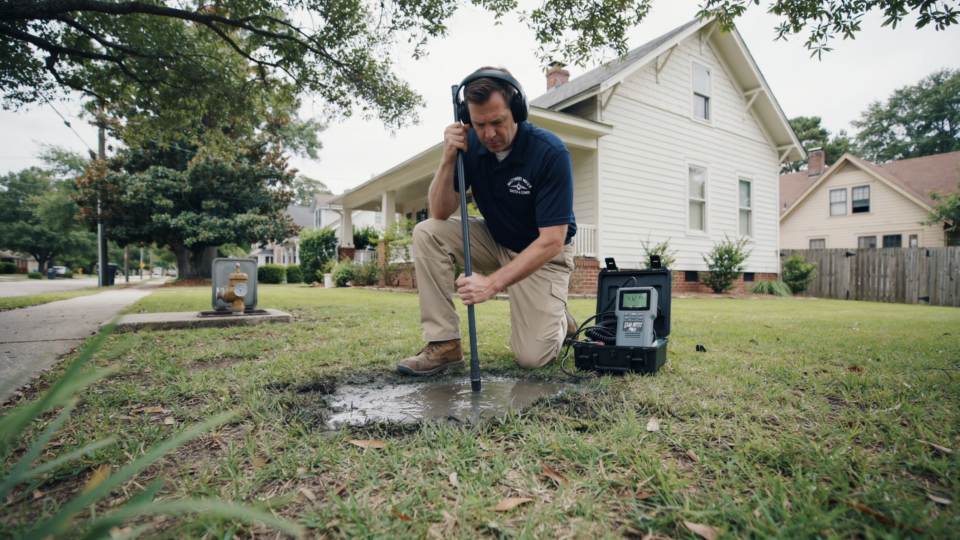
A homeowner in an older neighborhood in Matthews first noticed it while mowing in early June. One oval patch of lawn near the front walk stayed dark and spongy no matter how many dry, 90-degree days stacked up around it. The rest of the yard had gone crunchy by mid-afternoon. That one spot never did. The house dates back to the early 1970s, one of the original builds on the street. The homeowner had lived there five years without a single plumbing complaint worth calling anyone about.
A Spot That Refused to Behave Like the Rest of the Yard
For about two weeks, the homeowner chalked it up to a low spot that collected runoff. Neighbors offered the same guess: bad drainage, maybe a clogged French drain from a previous owner. But there hadn’t been rain in nine days. The patch was still cool and wet to the touch. Grass around the edges of the oval had started to look almost too healthy, a deeper green than anywhere else on the property. That kind of deep green is often the first sign that something underground is feeding it water it was never supposed to get.
By the third week, the homeowner had ruled out a leaking hose bib, a broken sprinkler head, and even a neighbor’s runoff crossing the property line. None of it added up. The patch stayed roughly the same size and shape day after day. That is its own kind of clue. Surface drainage problems tend to shift with rainfall and slope. A leak from a fixed point underground tends to stay put in the same spot.
Homeowners searching for a soggy yard spot wont dry around Matthews usually describe the same pattern: no obvious puddle, no burst pipe drama, just a patch of ground that stays wrong.
Ruling Out the Obvious Before Digging
When a technician came out, the first move wasn’t a shovel. It was the water meter. Static pressure at the meter had dropped by roughly 8 psi compared to what’s typical for that street. It was a small but telling drop, since nothing inside the house had changed. Toilets weren’t running, no fixtures were leaking, and the irrigation system had been off for the season. That combination pointed away from anything inside the home. It pointed toward the buried line connecting the meter to the house.
To narrow things down further, the technician used a ground microphone. He moved it in a grid across the yard, listening for the telltale sound of water escaping under pressure. The signal got louder directly over the soggy patch and quieter moving away from it in every direction. That is about as clean a confirmation as leak detection gets without actually opening up the ground.
A listening device confirmed it a few minutes later. It picked up a faint, steady hiss under that exact patch of lawn, consistent with a main water line leak rather than a surface drainage problem. In older Matthews neighborhoods, service lines from this era are often original to the house. That makes a slow underground leak more likely than in newer construction nearby.
What the Repair Involved
Detection happened the same day the technician arrived. That is typical once a pressure drop points to the service line rather than the plumbing inside the house. The actual repair length is more variable. Sometimes it’s a single point repair where the leak sits. Other times the surrounding pipe is degraded enough that a longer section needs to come out. In this case the diagnostic visit and initial assessment came to $180. The scope of the fix was confirmed once the line was exposed.
Point repairs are usually the more affordable path when the surrounding pipe is still in decent shape, since only the failed section needs to come out. A longer replacement costs more up front. But it can save a homeowner from paying for a second dig a year or two later if the rest of the line is already brittle. The technician explained that tradeoff plainly, without pushing either direction. He let the condition of the exposed pipe make the final call once the trench was open.
The homeowner explained the part that stuck with them wasn’t the repair itself but the explanation that came before it. “Once he showed me the pressure numbers and walked me through why that one patch of grass was greener, it stopped feeling like a mystery,” they said. “I wasn’t just taking someone’s word for it.”
What to Watch For
A single patch of lawn that stays damp, spongy, or unusually green while everything around it dries out normally is worth a second look. This is especially true in neighborhoods with older service lines. It’s easy to blame drainage and wait it out. But a slow underground leak rarely fixes itself. The water loss shows up eventually on a bill even if the yard never floods.
It also helps to glance at the water meter itself every so often. Most meters have a small leak indicator, a red or silver triangle or dial that spins whenever water is flowing through the line. It spins even if every fixture in the house is off. If that dial is moving with nothing running inside, that’s a strong sign the leak is somewhere between the meter and the house. If the same section of grass has stayed wet through more than one dry stretch, professional leak detection can confirm what’s happening before it turns into a bigger excavation.
If a patch of your own yard won’t dry out no matter the weather, it’s worth getting eyes on it before guessing further.
Details here reflect a typical case from this area, not one specific customer’s documented file.