Pressure Drops at Every Fixture, and the Meter and PRV Are Ruled Out Before Confirming a Main Line Leak in Huntersville, NC
Pressure Drops at Every Fixture, and the Meter and PRV Are Ruled Out Before Confirming a Main Line Leak in Huntersville, NC
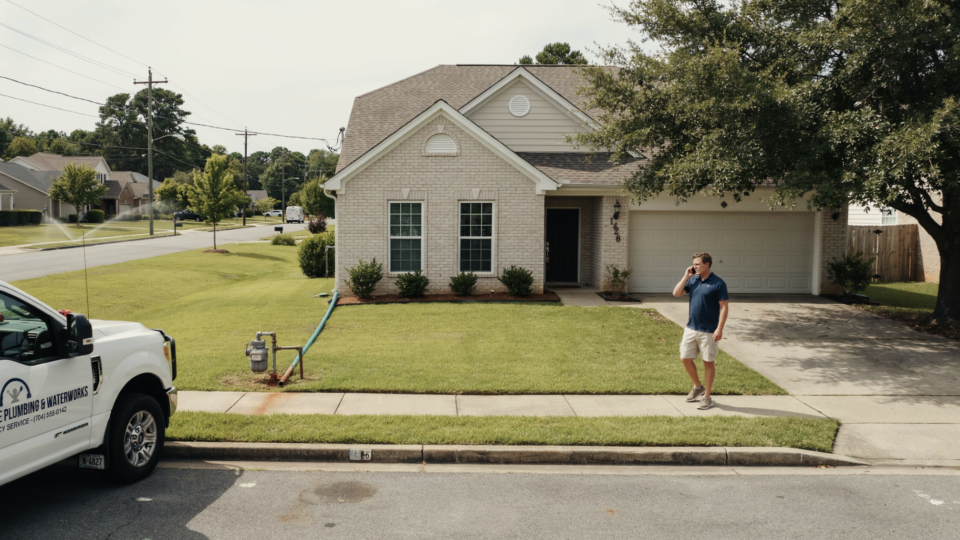
On the west side of Huntersville, a homeowner noticed the shower go weak on a Tuesday morning, then the kitchen faucet, then the hose bib out back. By afternoon every fixture in the house was running at a fraction of its normal flow. All of it happened on the same day, which ruled out a single fixture problem right away. The home is a single-story brick ranch built in the late 1980s. The couple who live there had never dealt with a plumbing issue serious enough to call a professional in the nine years they’d owned it.
The First Clue Was How Fast It Happened
A slow decline over weeks usually points to mineral buildup or an aging fixture. A drop that hits every tap in the house within a matter of hours points somewhere else entirely. They also noticed the toilets refilling slower than usual and the ice maker taking longer to cycle. On their own, those small details might not mean much. Together, they painted a consistent picture of reduced flow throughout the entire house.
The homeowner wondered that evening whether this was a whole-neighborhood issue or something specific to the property. They mentioned it to a neighbor across the street. The neighbor’s pressure hadn’t budged at all, which settled the question. The homeowner called a plumber the next morning.
West Huntersville is a mix of properties from the late 1980s through the mid-2000s. Pressure problems here tend to fall into a few familiar categories. A failing PRV and sediment building up in older galvanized branch lines are the most common. Less often, the cause is a leak in the buried service line itself. Ruling each one out in order is standard practice. It usually takes less than an hour to work through the list.
Eliminating the Easy Answers First
The technician started where most whole-house pressure problems actually originate: the meter and the pressure-reducing valve. Checking the PRV meant testing the pressure on both sides of the valve to confirm it was regulating correctly rather than sticking open or closed. That is a common failure point in homes with older valves. The meter itself was checked for any sign of a stuck register or debris restricting flow. Both of those problems can mimic a whole-house pressure drop without any leak at all. Both checked out fine. The PRV was holding a steady, correct output, and the meter itself showed no signs of a blockage or malfunction. With those two ruled out, attention shifted to the buried line running from the meter to the house.
A trace-and-listen check found it: a section of pipe losing pressure underground. That confirmed a leaking main water line rather than anything wrong with the home’s internal plumbing or the city’s supply. The leak sat roughly under the side yard, away from any visible wet spot. That is part of why it hadn’t been noticed sooner.
A 13-Foot Section, Replaced the Same Day
Detection wrapped up the same day it started. Once the leak’s location and the condition of the surrounding pipe were clear, the crew replaced about 13 feet of the service line rather than attempting a narrow point repair. The pipe on either side showed enough wear to make a longer fix the more reliable option. Replacing a section rather than patching a single point adds labor and material cost up front. But it reduces the odds of a second visit if nearby pipe was weakened by the same conditions that caused the original failure. The crew backfilled the trench and restored the yard the same afternoon, leaving only a slightly raised strip of soil to mark where the work had been done. The job, including detection and the replacement, came to $500. The technician also flushed the line briefly after the repair to clear any sediment stirred up by the work. He then checked pressure at three different fixtures around the house to confirm it had returned to a normal, consistent reading before calling the job finished.
What the homeowner remembered afterward wasn’t the pressure numbers or the excavation. It was the tone of the visit. “Nobody rushed around like it was a crisis,” they noted. “He just explained each step, checked the valve, checked the meter, then told me what was left before we dug anything up. It made the whole thing a lot less stressful than I expected.”
Signs Worth Acting On
A pressure drop that hits the whole house at once, rather than one fixture at a time, is a signal worth taking seriously. This is especially true if it happens within a single day rather than building gradually. Checking the meter and PRV first is the right move. But if both come back normal, the service line itself deserves a look before assuming the problem will resolve on its own. Homeowners can do a rough version of this check themselves before calling anyone. Turn off every fixture and appliance. Note the reading on the water meter. Wait fifteen minutes without using any water. Then check the meter again. Any movement in that window points toward a leak somewhere in the system.
It’s also worth timing how quickly pressure returns after nearby usage, like running the dishwasher or a shower. A consistent lag across multiple fixtures on the same day is a more reliable signal than a single slow tap. Anyone noticing the same pattern of sudden, house-wide pressure loss should consider a leak inspection sooner rather than later. A leak under pressure tends to get worse, not better, while it sits unaddressed.
If your water pressure dropped everywhere in the house on the same day, don’t wait to find out why.