Main Line Drain Backup Behind Repeated Toilet Overflow
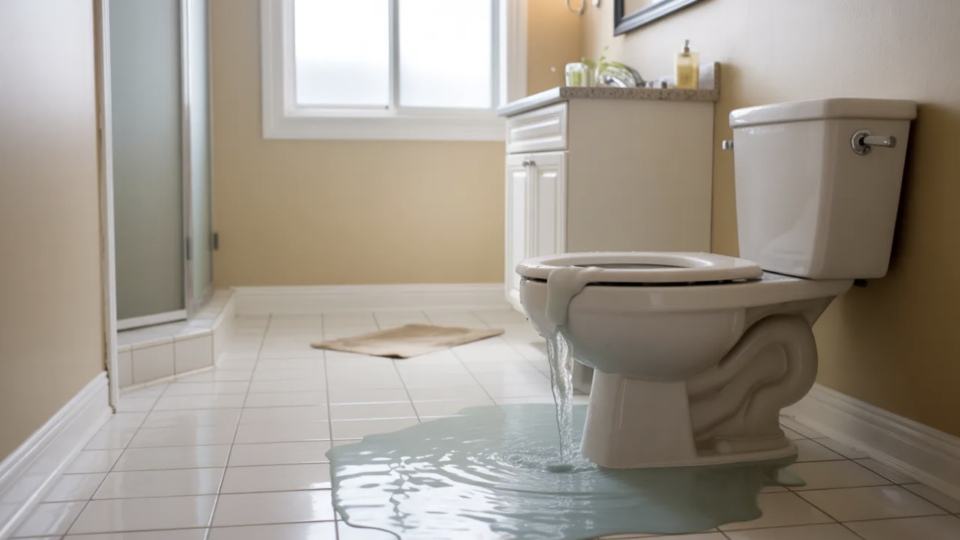
Repeated toilet overflow may point to a main line drain problem. See how this Charlotte plumbing case was diagnosed and resolved before it caused more damage.
It started with what seemed like a typical plumbing issue — a toilet overflow in one bathroom. The homeowner cleared what looked like a simple clog, cleaned up the mess, and expected everything to go back to normal.
But it didn’t. A day later, the same toilet overflowed again. And this time, something else felt off — water in the sink nearby was draining slower than usual, and there was a gurgling sound coming from the tub. That’s when it became clear the problem wasn’t just the toilet.
What Was Really Going On
At first glance, it looked like a local clog — something stuck in the toilet or just beyond it. But the repeated overflow, combined with slow drains in other parts of the house, pointed to a bigger issue. When multiple fixtures start acting up at the same time, it usually means there’s a restriction somewhere deeper in the system — often in the main sewer line.
In this case, wastewater had nowhere to go. Instead of flowing out of the house, it was backing up and finding the easiest way back in — through the toilet.
Why the Signs Mattered
One of the biggest clues was how different fixtures were reacting together. Flushing the toilet affected the tub. The sink drained slowly. There were subtle sounds — bubbling, gurgling — that don’t happen in a healthy system.
These are classic warning signs that the issue isn’t isolated. A single clogged toilet is usually straightforward. But when the whole system starts behaving strangely, it’s almost always a main line problem.
How the Issue Was Fixed
Once plumbers arrived and assessed the situation, they focused on the main drain line instead of the toilet itself. The blockage was located deeper in the system and cleared using professional equipment. After that, they didn’t just assume everything was fine — they tested multiple fixtures throughout the home. Toilets were flushed, sinks were run, and tubs were drained to make sure water was moving freely again and no pressure was building up inside the pipes.
What Changed After the Repair
As soon as the main line was cleared, everything went back to normal. No more overflows. No more slow drains. No more strange sounds from the pipes. What had looked like a recurring bathroom issue turned out to be a single problem affecting the entire drainage system.
What This Situation Teaches
The key lesson here is simple: repetition changes the diagnosis. If a toilet overflows once, it’s probably a local clog. But if it happens again — especially together with slow drains or unusual sounds elsewhere in the house — it’s a strong sign the problem is deeper.
Main line backups don’t fix themselves, and they tend to get worse over time. Acting early can prevent not just inconvenience, but serious issues like contaminated water backing up into living spaces and expensive cleanup.
In situations like this, it’s better to stop guessing and look at the system as a whole.