Emergency Kitchen Supply Line Leak Under the Sink
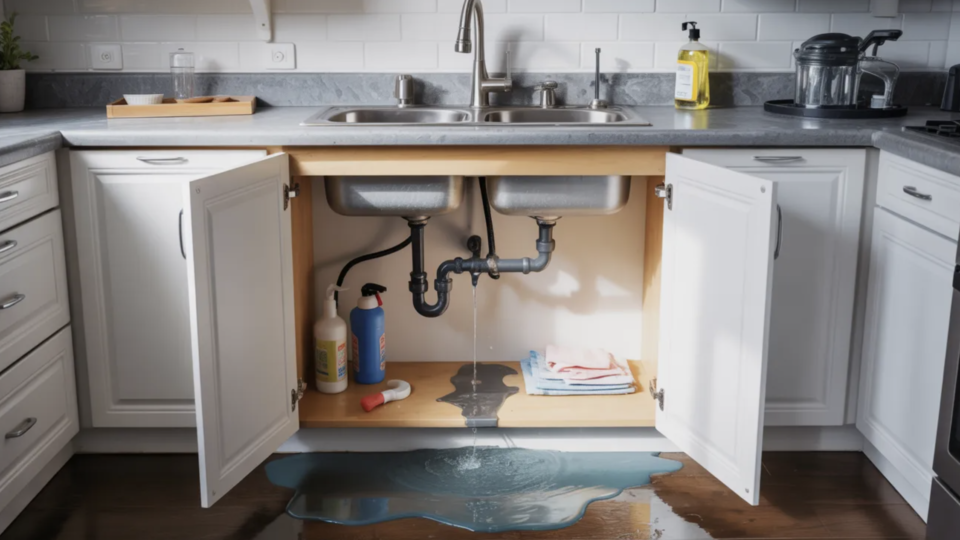
A leaking kitchen supply line can quickly damage cabinets and flooring. This Charlotte emergency plumbing case shows how fast action prevented a bigger problem.
It started with something small. The homeowner opened the cabinet under the kitchen sink and noticed water pooling at the bottom. At first, it didn’t look serious — just a bit of moisture. But within minutes, it became clear the water wasn’t stopping.
What Was Actually Happening
The source of the leak was one of the supply lines — the flexible hose that connects the water shut-off valve to the faucet. These lines are usually out of sight and easy to forget about, but they are constantly under pressure. Over time, the material can wear out, especially at connection points.
In this case, the leak was coming from a weakened section near the fitting. It wasn’t a full rupture, but a steady drip under pressure — enough to quickly fill the cabinet and start spreading onto the floor.
Why This Becomes a Problem Fast
Even a small leak under pressure can cause damage much faster than people expect. Cabinet bases are often made from particle board, which absorbs water quickly and starts to swell and deform. If the leak continues, water can reach the flooring and even seep into subfloor layers. What looks like a “minor drip” can turn into visible damage within a few hours.
Immediate Action
The homeowner did the right thing — shut off the water supply under the sink. That stopped the flow and prevented further damage while waiting for repair. This step alone can make a huge difference in how serious the situation becomes.
How the Issue Was Fixed
When the plumber inspected the setup, the problem was confirmed: a worn-out supply line. The damaged hose was removed and replaced with a new one. Since these components are relatively inexpensive, replacing them is usually faster and more reliable than trying to fix them.
The connections were tightened properly, and the system was tested under pressure. Water was turned back on and left running for several minutes to make sure there were no leaks at the new connection points.
What Changed After
Once the new line was installed, the leak stopped completely. The cabinet was dried out, and because the issue was caught early, the homeowner avoided more serious damage to the kitchen structure.
What This Situation Teaches
Supply lines are one of the most common and overlooked failure points in a home. They are cheap, easy to replace, but can cause a lot of damage if they fail. Warning signs to watch for: slight moisture under the sink, corrosion near fittings, small drips, or a faint musty smell.
The key takeaway is simple: if you see water where it shouldn’t be — act immediately. Even a slow leak under pressure can escalate quickly. And if your supply lines are several years old, it’s often worth replacing them proactively rather than waiting for a failure.