Emergency Plumbing Service in Charlotte, NC
Drain Cleaning
A slow drain rarely fixes itself. What starts as standing water in a shower or a kitchen sink that drains sluggishly almost always gets worse over time — until water stops moving altogether or backs up into the home. If you are dealing with a recurring clog, multiple slow drains, or water backing up from one fixture when you use another, it is time to call for professional drain cleaning in Charlotte, NC.
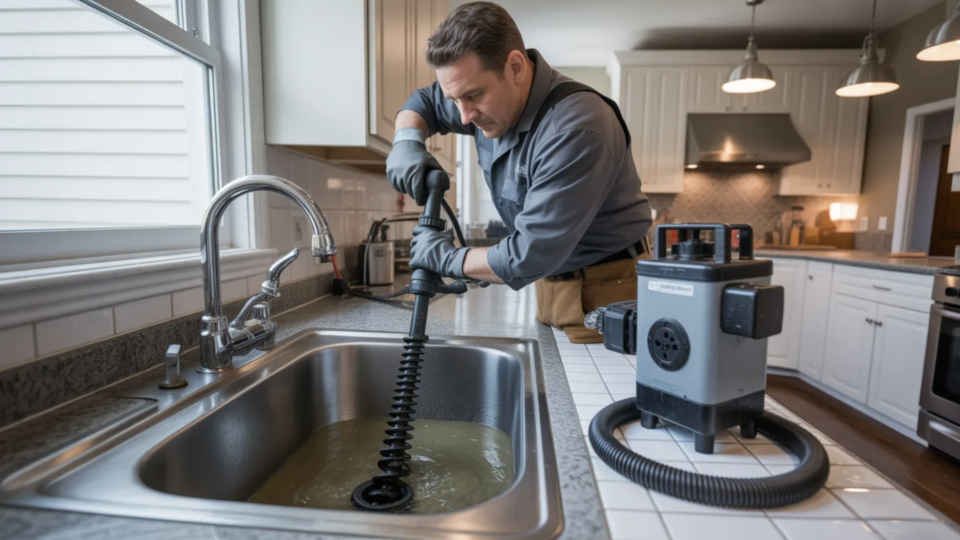
Reliable drain cleaning in Charlotte, NC for clogged sinks, slow drains, and main line issues. We restore flow quickly using professional equipment.
Drain Cleaning in Charlotte, NC — Same-Day Service for Clogged and Slow Drains
A slow drain rarely fixes itself. What starts as standing water in a shower or a kitchen sink that drains sluggishly almost always gets worse over time — until water stops moving altogether or backs up into the home. If you are dealing with a recurring clog, multiple slow drains, or water backing up from one fixture when you use another, it is time to call for professional drain cleaning in Charlotte, NC.
Why Drain Problems Are Common in Charlotte, NC
Charlotte’s geography and housing stock create specific drain challenges that homeowners in other cities don’t face to the same degree.
The region is built on expansive clay soil. Clay soil shifts with moisture — swelling when wet, contracting when dry. Over decades, this movement puts stress on underground drain lines, causing pipes to crack, separate at joints, or shift slightly out of alignment. When pipes shift, debris catches more easily, and tree roots find their way in through the cracks.
Charlotte also has a lot of mature tree cover, particularly in established neighborhoods like Dilworth, Myers Park, Elizabeth, and Plaza Midwood. Oak, maple, and sweetgum trees — common throughout the city — send roots deep in search of moisture. Underground drain lines are a reliable source, and roots will infiltrate even a hairline crack over time.
On top of that, many homes in inner Charlotte were built in the 1950s through 1970s and have original cast iron or clay tile drain lines. These materials degrade over time — cast iron corrodes and develops rough interior surfaces that catch grease and debris, while clay tile joints crack and separate. Homes that have never had their main line inspected or cleaned are frequently operating with partially restricted lines.
Signs You Need Drain Cleaning
- Water drains slowly from sinks, tubs, or showers
- The same clog keeps coming back in the same fixture
- Gurgling sounds from a drain when another fixture is used
- Water backs up into a tub or shower when the toilet is flushed
- Kitchen sink holds standing water after washing dishes
- More than one drain in the house is slow at the same time
- Bad odors rising from drains — especially in the kitchen or basement
- Toilets that bubble or gurgle without being flushed
When only one fixture is affected, the blockage is usually local — in the trap or the branch line for that fixture. When multiple fixtures are slow or backing up together, the problem is deeper in the system, often in the main drain line.
Kitchen Drain Cleaning
Kitchen drains are the most common source of calls in Charlotte homes. Grease is the primary culprit. Cooking oil, bacon fat, butter, and food residue go down the drain in liquid form — but they cool and solidify on the inside of the pipe, building up layer by layer over months and years. Dish soap and hot water slow this process but do not prevent it.
Garbage disposals make the problem worse in many cases. Food particles that are not fully ground pass through and mix with grease buildup downstream, creating dense blockages that simple plunging will not clear.
Store-bought chemical drain cleaners can temporarily open a partial blockage, but they do not remove the underlying buildup and are corrosive to older pipes. They are not a long-term solution for recurring kitchen drain problems.
Professional drain cleaning for a kitchen line typically involves a drain snake or hydro-jetting — a high-pressure water jet that clears buildup from the pipe wall rather than just punching a hole through it.
Bathroom Drain Cleaning
Bathroom sink and tub/shower drains clog primarily from hair, soap scum, and toothpaste buildup. Hair binds with soap residue and forms dense clumps that accumulate in the trap and the first few feet of pipe. These clogs respond well to drain snake service in most cases.
Toilet clogs that do not clear with a plunger usually involve a blockage deeper in the drain or a partial obstruction in the toilet itself — foreign objects, excessive paper, or a buildup at the first bend in the line.
When a bathroom clog keeps returning after clearing, it often means the blockage is not being fully removed, or there is a partial restriction further down the line that is allowing debris to accumulate repeatedly in the same spot.
Main Line Drain Cleaning
The main drain line carries all wastewater from the home to the city sewer connection at the street. In Charlotte, this line runs beneath the yard and is typically 4 inches in diameter on residential properties.
Main line problems show up differently than fixture clogs. The most common signs are multiple slow drains throughout the house at the same time, sewage odors in the lowest drains, or water backing up in the floor drain or tub when the washing machine runs.
Main line cleaning typically requires a motorized drain auger or hydro-jetting. If tree root intrusion is suspected — common in Charlotte’s older neighborhoods — a camera inspection is recommended to assess the extent of root growth before cleaning.
Drain Snake vs. Hydro-Jetting — What’s the Difference?
Drain snake (also called a drain auger) — a flexible cable with a cutting head that breaks through or retrieves a blockage. Effective for most residential clogs in branch lines. Fast and cost-effective for straightforward blockages.
Hydro-jetting — uses highly pressurized water (typically 1,500–4,000 psi) to scour the interior of the pipe, removing grease buildup, scale, and root material from the pipe wall itself rather than just clearing a path through the clog. More thorough than snaking, and appropriate for recurring clogs, main line cleaning, and situations where buildup is extensive.
For a first-time kitchen or bathroom clog, snaking is usually the right starting point. For recurring clogs or main line issues, hydro-jetting is more effective and produces longer-lasting results.
How Much Does Drain Cleaning Cost in Charlotte, NC?
Drain cleaning in Charlotte typically costs:
- Single fixture drain cleaning (sink, tub, shower): $150–$250
- Toilet auger service: $100–$200
- Main line drain cleaning with snake: $250–$400
- Hydro-jetting (main line): $350–$600
- Camera inspection of drain line: $150–$300
Costs vary depending on access, pipe depth, and severity of the blockage. If root intrusion is confirmed during a camera inspection, additional work may be needed to clear or repair the affected section.
Serving Charlotte, NC and Surrounding Areas
We provide drain cleaning in Charlotte, NC and nearby communities including Matthews, Huntersville, Pineville, Concord, Gastonia, Mint Hill, Mooresville, Rock Hill, Fort Mill, and Indian Land. Same-day service is available for urgent drain backups throughout the Charlotte metro area.
Frequently Asked Questions
Do slow drains always mean a clog?
Usually, yes. A slow drain is almost always a sign of buildup or a partial blockage restricting water flow. It will not improve on its own and typically worsens over time.
Can one clogged fixture affect other drains in the house?
If multiple fixtures are slow at the same time, the problem is likely in the main drain line, not a single fixture. A local clog in one fixture will not normally affect others.
Are chemical drain cleaners safe to use?
They can temporarily open a partial blockage, but they do not remove the underlying buildup and are corrosive to older pipes. Repeated use can damage pipes and is not recommended as a long-term solution.
How often should main drain lines be cleaned?
For most Charlotte homes, a main line cleaning every 2–3 years is a reasonable preventive measure — especially in homes with mature trees in the yard or older clay tile or cast iron lines.
How do I know if I have root intrusion in my drain line?
Signs include slow drains that return quickly after clearing, gurgling sounds, and sewage odors. A camera inspection confirms whether roots are present and how extensive the intrusion is.
Do you offer same-day drain cleaning in Charlotte?
Yes. Same-day service is available for drain clogs and backups throughout Charlotte, NC and surrounding areas.
Need drain cleaning in Charlotte, NC? Call +1 (833) 865-1777 or use the Request Emergency Service form. Available 24/7 for urgent drain backups.
More Services
Explore More Emergency Plumbing Services in Charlotte, NC and Surrounding Areas
Browse other common emergency plumbing issues homeowners in Charlotte, NC and surrounding areas may need help with.
Burst Pipe Repair
Fast dispatch for active leaks, burst pipe emergencies, and water damage concerns.
Water Heater Problems
Hot water loss, tank leaks, and urgent system issues routed to local help fast.
Overflowing Toilet
Urgent toilet backup and overflow issues handled before they cause more damage.
Sewer Line Backup
Fast response for sewage backup warning signs, foul odors, and major drain blockages.
Emergency Leak Detection
Hidden leaks, ceiling water spots, and sudden pressure loss routed to local help quickly.
Clogged Garbage Disposal
Jammed garbage disposals, backed-up kitchen sinks, and grinding issues handled with fast local help.
Slab Leak Repair
Warm floor spots, unexplained water use, and hidden pipe leaks under the slab checked quickly.
Main Water Line Leak
Sudden pressure loss, soggy yard areas, and urgent water line leaks routed for rapid response.